September 19, 2026 Post by : Editorial Conservation Ethics
The Urban Shore: Helping Birds Thrive in Human-Dominated Coastlines
There is a particular magic to watching a flock of sandpipers wheel over a tidal flat, their bodies moving as a single, shimmering entity. For many of us, the urge to get closer, to capture that perfect frame or simply to see the intricate feather patterns up close, is powerful. But as coastal birdwatching grows in popularity, it is worth pausing to consider the impact of our collective presence on the birds that call these fragile edges home.
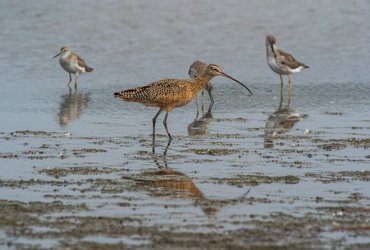
Shorebirds operate on a tight energy budget. Unlike garden birds that can casually flit to a feeder, a migrating sandpiper or a wintering plover is often living on a knife's edge. Every calorie counts. When a bird is forced to flush—to take flight because a human has crossed an invisible threshold—it burns energy it may not be able to spare. Repeated disturbances can push a bird off its preferred feeding ground and onto a less productive one, or worse, cause it to abandon a roost site entirely.
The Silent Signals of Stress
Learning to read bird behavior is the first step toward ethical observation. A relaxed shorebird will typically be feeding continuously, preening, or resting with its head tucked. An alert bird, however, tells a different story. It will stand tall, stop feeding, and fix you with a direct gaze. You might see it bob its head or flick its tail nervously. These are the early warning signs that you are too close.
The next stage is the 'anxious walk'—the bird begins to move away from you, often glancing back over its shoulder. If you see this, you have already disturbed it. The final stage is flushing, which should be avoided at all costs. The rule of thumb is simple: if the bird is looking at you more than it is looking at the mud, you are too close. Back away slowly and quietly, and give it the space it needs.
Practical Fieldcraft for the Coastal Observer
So how do we balance our desire to watch with our duty to protect? It starts with preparation and patience. Use a spotting scope or a long lens rather than trying to creep closer. A scope allows you to observe intimate behaviors—the way a Dunlin probes the mud, the aggressive posturing of a territorial Redshank—without ever intruding on their space.
When walking on a beach, pay attention to the landscape. Avoid walking directly through flocks of roosting birds, especially at high tide when their available habitat is already squeezed. Instead, walk along the water's edge, giving the roost a wide berth. Keep dogs on leads in areas known to host sensitive species, and respect all posted signs and seasonal closures. These closures are not arbitrary; they are often the result of years of research showing that birds need these undisturbed zones to survive.
Ultimately, ethical birdwatching is about empathy. It is about recognizing that we are visitors in their world. The next time you feel the urge to get just a little closer for a better look, remember that the most rewarding sightings are often the ones where the bird never knew you were there.

Author

22 feb,2025
This incident opened my eyes to the value of Insurance in general, so I decided to examine my personal and business insurance.

Comment (3)
The payments are made directly from one person to another without passing through a central bank or clearing house.
22 feb,2025
ReplyVolunteer Power: How Citizen Scientists Are Reshaping Shorebird Research
23 feb,2025
ReplyThe Ethics of the Scope: When Does Watching Become Disturbing?
23 feb,2025
Reply